Group therapy recovery as a shared practice.
Group therapy is the highest-volume clinical service at every level of care — not because it's cheaper, but because shame loses traction in a room of people who get it.
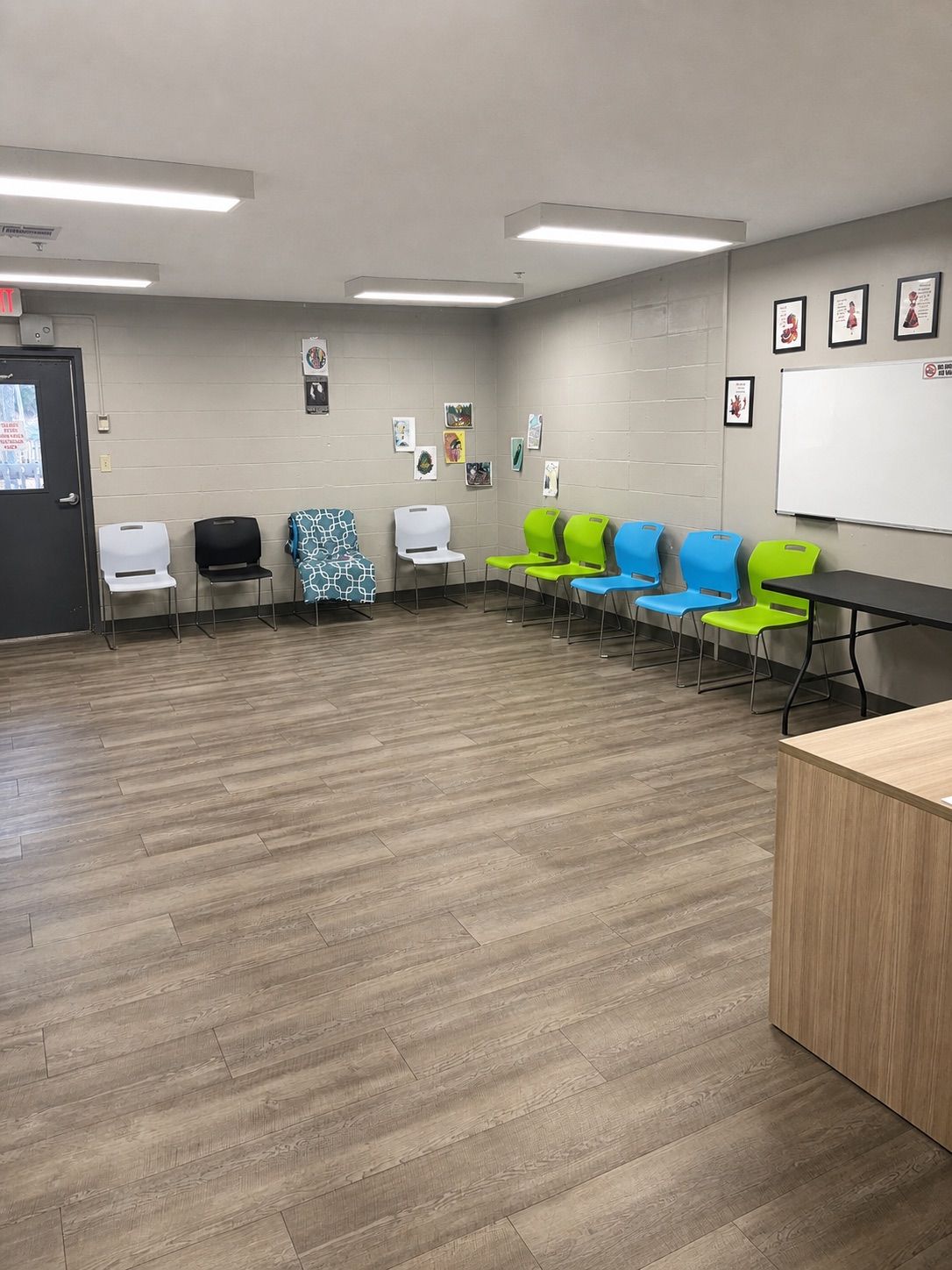
Different rooms for different work.
Our programming uses several group formats, each doing a different job. The mix changes by level of care and by what patients need.
Process groups
Open conversation, facilitated by a clinician, where patients work through what's coming up in real time — cravings, family stress, shame, breakthroughs. The room becomes a mirror and a safety net. Process groups are the heart of residential programming.
Psychoeducation groups
Structured learning groups on specific topics — addiction neuroscience, relapse prevention, family dynamics, trauma's role in use, medication management. Information that patients need to make sense of what's happening to them.
Skills groups
Practical skill-building — CBT skills, DBT skills, distress tolerance, communication, refusal scripts. Skills get taught, rehearsed, and practiced between sessions.
Specialized groups
Topic-focused groups when patient mix supports them — gender-specific work, justice-involved patients, family members, peer recovery support. Specialized groups create rooms where shared experience speeds the work.
Group therapy is core, not supplemental.
- Universality — discovering that what felt isolating is actually shared. Shame loses traction in a room of people who get it.
- Practice in real time — recovery skills tested in a low-stakes social environment before they have to work in high-stakes ones.
- Peer accountability — recovery becomes a shared project, not an individual burden. Patients who go through treatment together often stay connected through aftercare.
- Cost-effective intensity — group programming delivers significant clinical hours at lower per-patient cost, which is why most insurance plans cover it across our levels of care.
- The therapist effect amplifies — a skilled facilitator helps the whole group's work compound across sessions, not just one patient at a time.
Common questions about group therapy.
What if I'm uncomfortable sharing in a group?
Most patients are uncomfortable at first. The work doesn't require oversharing on day one — it requires showing up. Sharing builds as trust builds. Patients who start quiet often find their voice over the first weeks. The facilitator's job is to make the room safe enough for that to happen.
How is group therapy different from AA or NA?
AA and NA are peer-led mutual-aid groups built around a specific recovery model and the 12 steps. Group therapy at Hickory Grove is clinician-facilitated, evidence-based, and integrated with each patient's individual treatment plan. Many patients participate in both — they're complementary, not competing.
Does insurance cover group therapy?
Most major commercial insurance plans cover group therapy as a core service across our levels of care. It's typically the highest-volume clinical service in any SUD program. Our admissions team can verify your specific benefits.
Is everything I say in group confidential?
Yes — confidentiality is required by HIPAA, by 42 CFR Part 2 (which adds additional protections for SUD treatment records), and by the group agreement every member signs. Other patients agree not to disclose what's said. The clinician is bound by law.
Ready when you are.
Admissions answers 24/7. We work with commercial insurance and verify your specific coverage on the call.